Trying to picture a length of 57 inches can be difficult when you don’t have a measuring tape nearby. You might be checking whether a piece of furniture will fit, comparing an item’s dimensions, or simply wondering how long this measurement looks in real life.
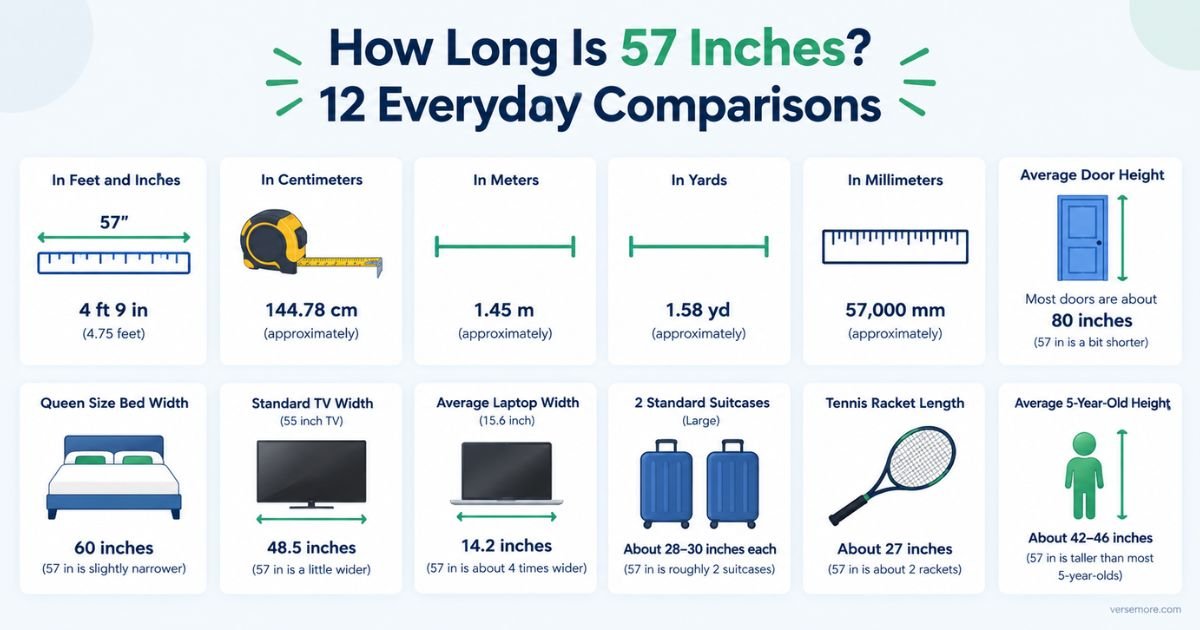
57 inches is equal to 4 feet 9 inches, or approximately 144.78 centimeters.
That’s just 3 inches shorter than 5 feet, making it easier to visualize when compared with familiar household objects.
In this guide, you’ll learn how long 57 inches is in different units, explore 12 everyday objects that help you picture the length, and discover practical ways to measure or estimate this distance. The comparisons will distinguish approximate object sizes from exact measurements so you can use them confidently.
How Long Is 57 Inches Exactly?
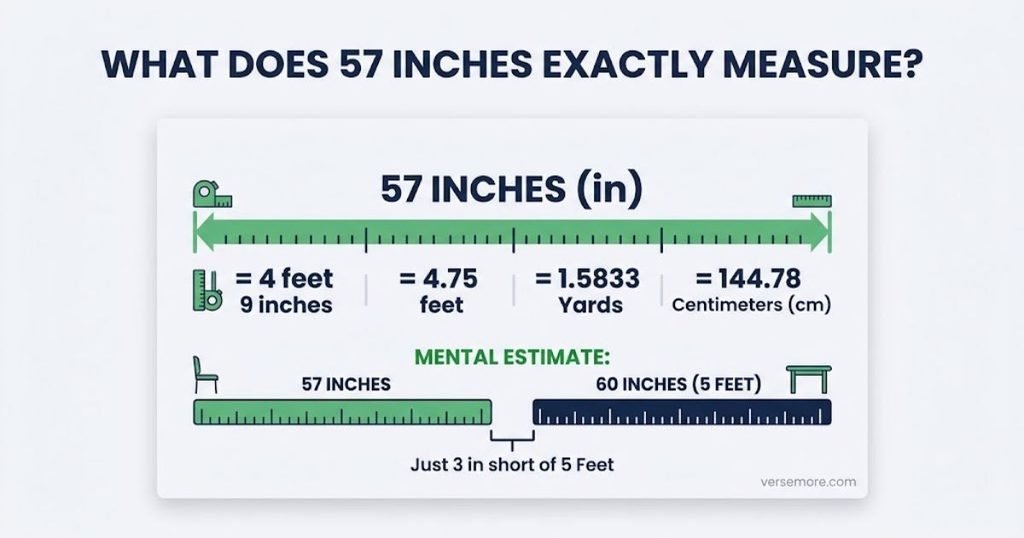
57 inches measures 4 feet 9 inches. In decimal feet, that is 4.75 feet, while the metric equivalent is 144.78 centimeters or 1.4478 meters.
An inch is a standard unit of length in the US customary system. Since one foot contains 12 inches, you can convert 57 inches into feet by dividing 57 by 12.
| Measurement unit | Equivalent of 57 inches |
| Inches | 57 in |
| Feet and inches | 4 ft 9 in |
| Decimal feet | 4.75 ft |
| Yards | 1.5833 yd (rounded) |
| Centimeters | 144.78 cm |
| Millimeters | 1,447.8 mm |
| Meters | 1.4478 m |
Note: The conversions above use the exact relationship of 1 inch = 2.54 centimeters. The yard value is rounded to four decimal places.
How Is 57 Inches Converted Into Feet?
To convert inches into feet, divide the total number of inches by 12 because there are 12 inches in a foot.
57 ÷ 12 = 4.75 feet.
The decimal portion, 0.75 feet, equals 9 inches. Therefore, 57 inches = 4 feet 9 inches.
This distinction matters when measuring furniture or a space in a room. A measurement of 4.75 feet and a measurement of 4 feet 9 inches describe the same length, but feet-and-inches notation is often easier to read on a tape measure.
How Many Centimeters and Meters Are 57 Inches?
To convert 57 inches to centimeters, multiply 57 by 2.54:
57 × 2.54 = 144.78 centimeters.
To convert the result into meters, divide by 100:
144.78 ÷ 100 = 1.4478 meters.
For everyday use, you can round this to approximately 145 centimeters or 1.45 meters. Keep the more precise figure when you need to compare dimensions or check whether an object will fit into a particular space.
Is 57 Inches Almost 5 Feet?
Yes. Five feet equals 60 inches, so 57 inches is only 3 inches shorter than 5 feet.
This is a useful mental reference when you need to estimate the length without a measuring tool. However, a rough visual estimate is not reliable enough for furniture installation, construction, or other situations where a small measurement difference matters.
The simplest way to remember the measurement is 57 inches is 4 feet 9 inches, just short of 5 feet.
12 Everyday Objects to Help You Visualize 57 Inches
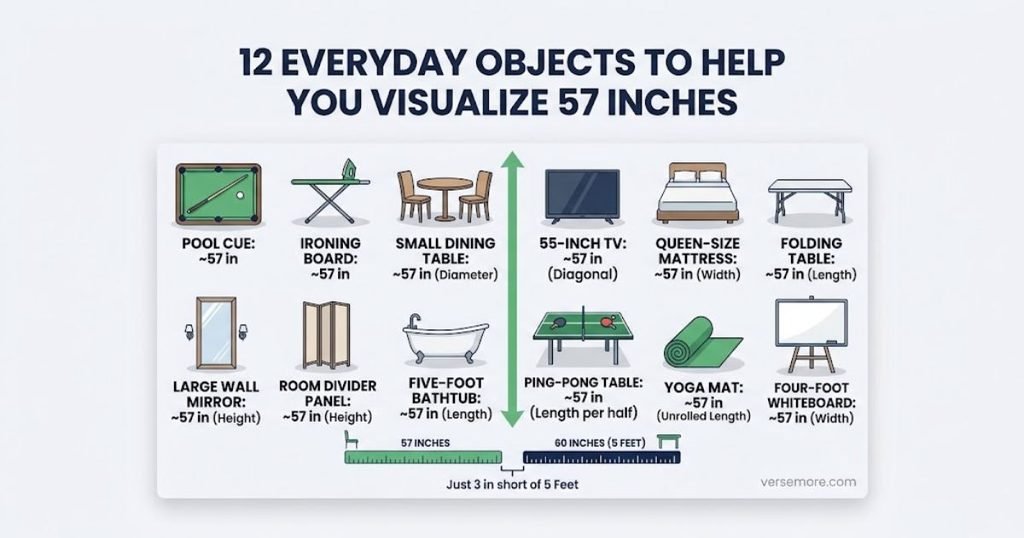
A length of 57 inches is easier to imagine when you compare it with familiar items. However, most everyday products are sold in standard sizes or ranges rather than at exactly 57 inches. The following examples use practical comparisons, with important distinctions where an object’s dimensions vary by model or design.
For the most accurate comparison, measure the object’s actual length, width, or height in the direction that matters. A product’s advertised size may refer to a different dimension than the one you need.
1. A Standard Pool Cue
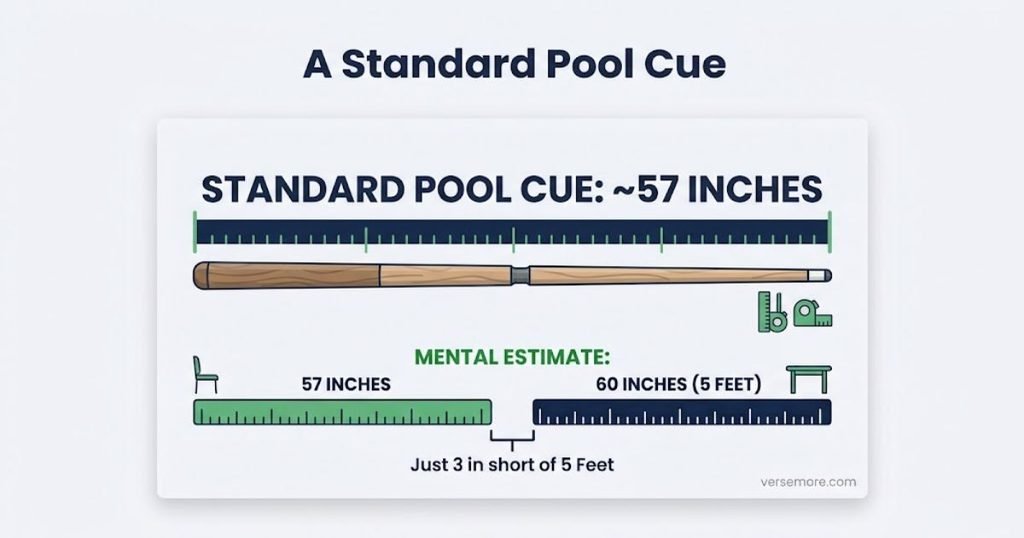
A standard pool cue is one of the closest everyday examples of a length around 57 inches. Many pool cues measure approximately 57 to 58 inches, although the exact length varies by model.
If you have played pool or visited a billiards hall, you can use a cue stick as a mental reference for 57 inches. Its length is close enough to make a useful visual comparison, even though a typical cue may be an inch longer than the target measurement.
2. A Full-Size Ironing Board
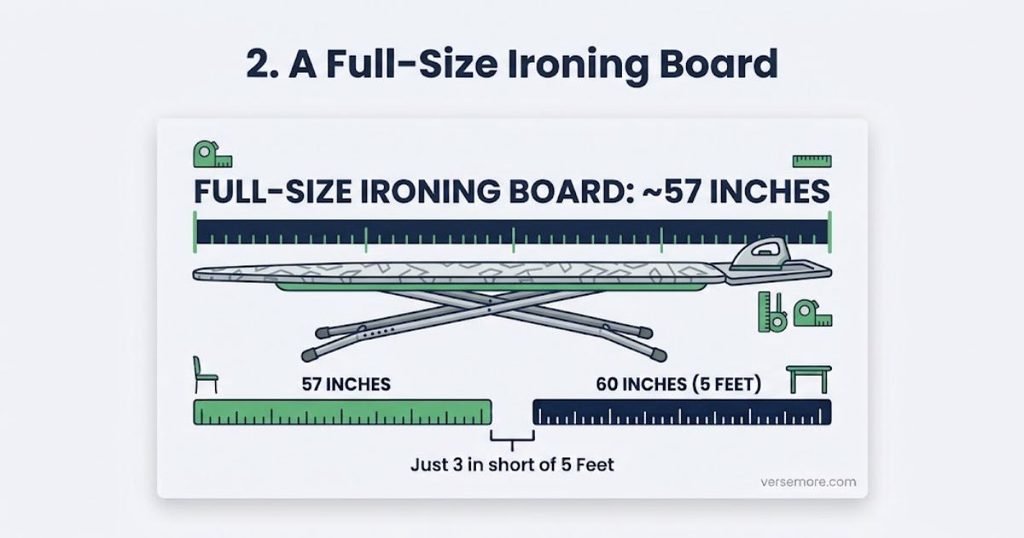
An ironing board can help you picture a long, narrow object used in an everyday household. However, ironing boards come in different lengths, and there is no single universal dimension.
Some models may be close to 57 inches when measured from one end to the other, while compact boards are considerably shorter. Check the product’s listed dimensions before using one as a measurement reference.
3. A Small Dining Table
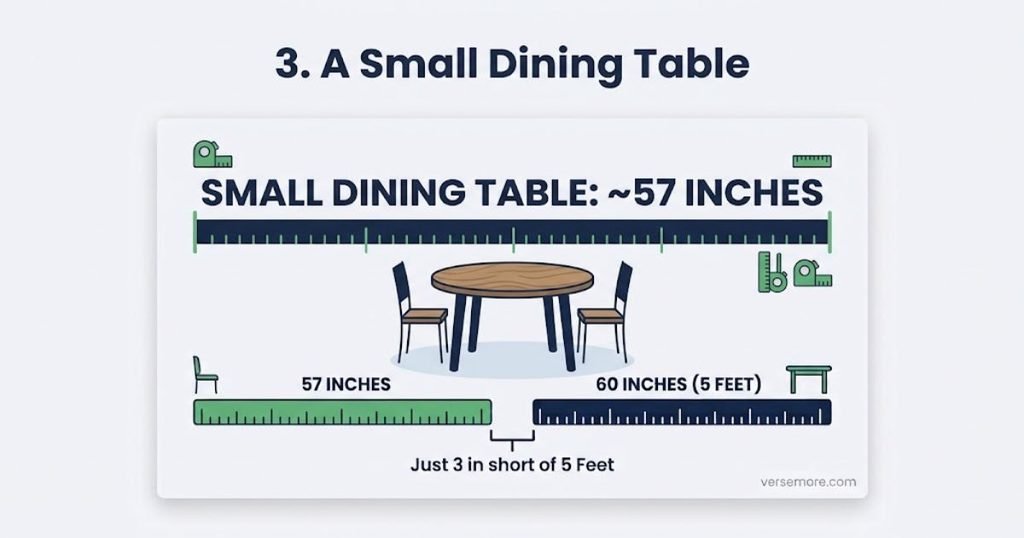
A small dining table provides a useful furniture comparison when you are planning a room or arranging a dining area. Some rectangular tables have a length or width close to 57 inches, depending on their design.
The important detail is which side you measure. A table that is 57 inches wide may be much longer in the other direction. Round tables also require a diameter measurement rather than a length measurement.
4. A Folding Table
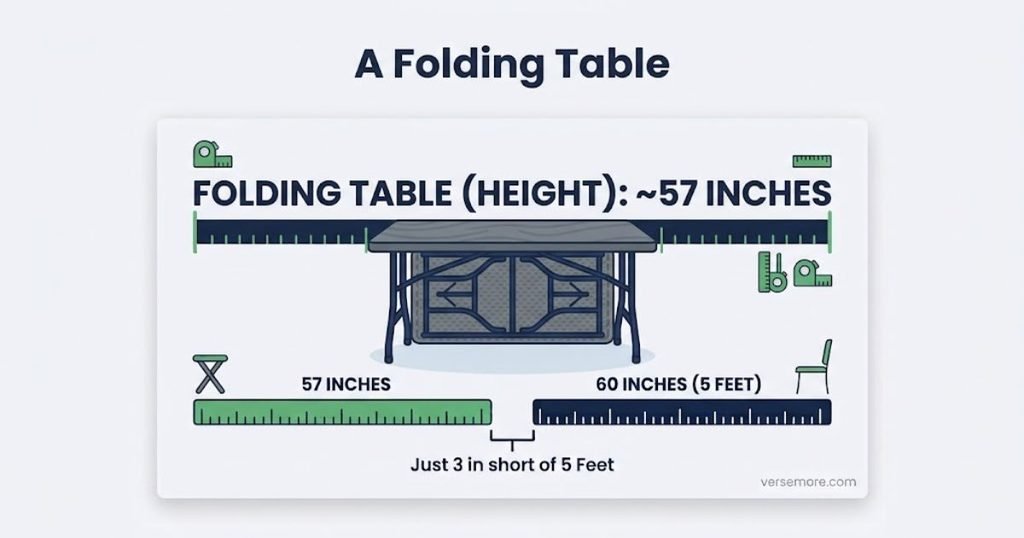
Folding tables are useful for temporary workspaces, family gatherings, and home events. Certain models have a side measuring close to 57 inches, but common folding tables are also sold in other standard lengths, including 48 and 60 inches.
A 60-inch table is 3 inches longer than 57 inches, making it a helpful nearby comparison. If you are checking whether a folding table will fit against a wall, use its actual specifications rather than assuming every model has the same size.
5. A Large Wall Mirror
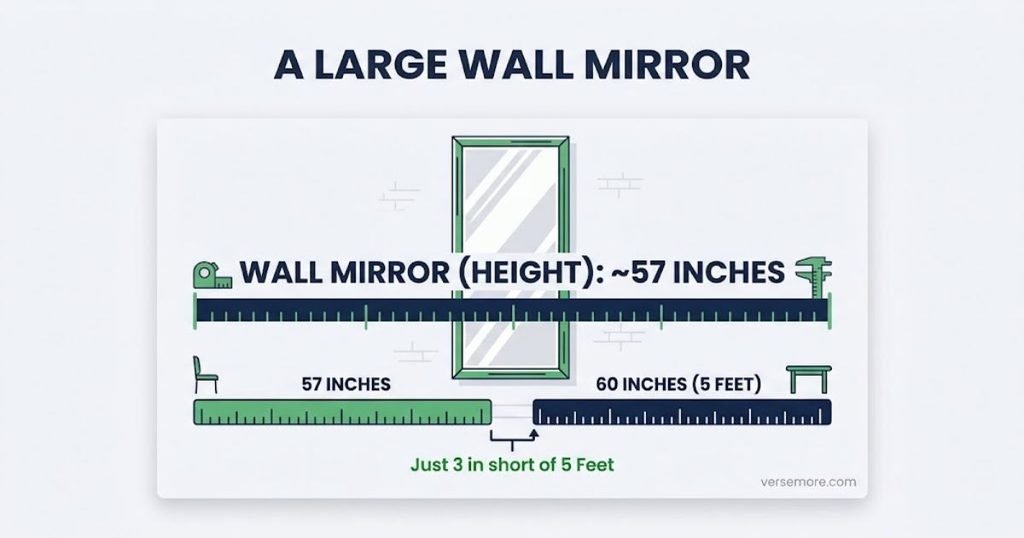
A large wall mirror can help you visualize a measurement close to 57 inches when its vertical or horizontal dimension is similar to that length.
For example, a mirror measuring 57 inches tall would have the exact target height, while a mirror with a different height and width would not necessarily provide the same comparison. Mirror sizes depend on their intended use, frame, and installation style.
6. A Room Divider Panel
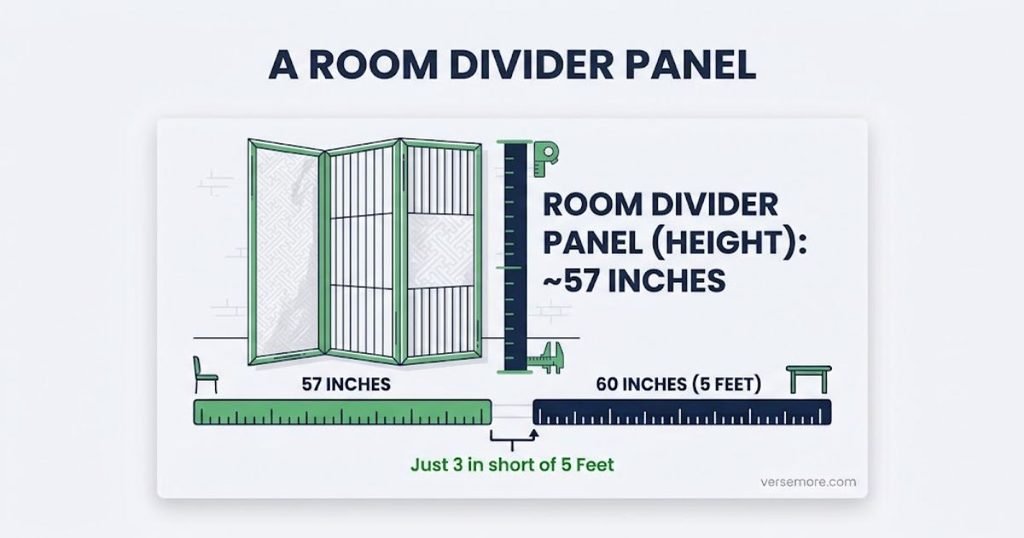
A room divider panel is another useful reference when planning interior spaces. Some folding screens and divider panels approach 57 inches in height, although others are much taller.
This comparison is particularly helpful if you are deciding whether a divider will provide privacy beside a desk or separate two areas of a room. Measure the panel’s height separately from its width when fully opened.
7. A 55-Inch Television
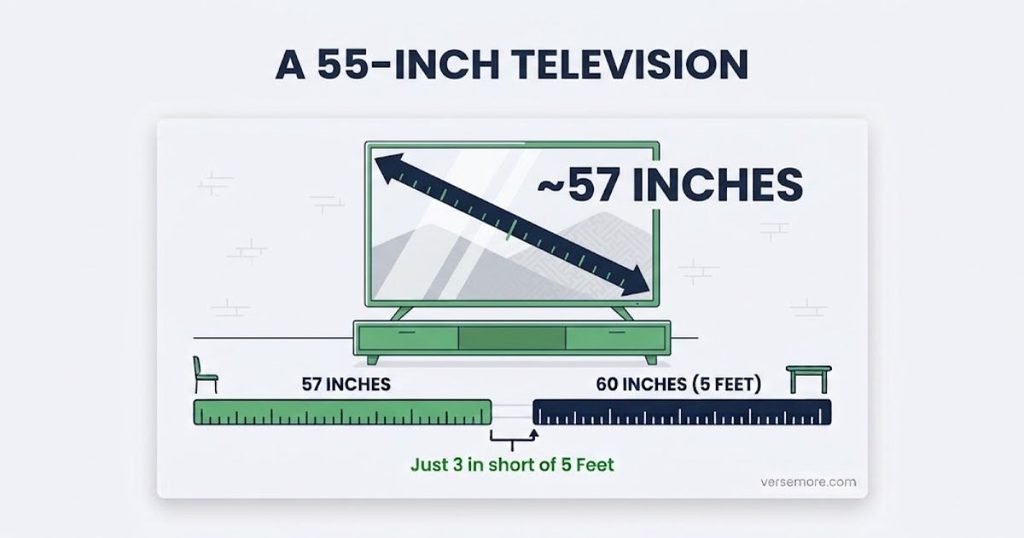
A 55-inch television is a useful example of why product measurements need to be interpreted correctly. The 55-inch figure refers to the screen’s diagonal measurement, not its horizontal width.
A typical 55-inch television is approximately 48 to 49 inches wide, depending on the model and frame. That means its width is about 8 to 9 inches shorter than 57 inches.
This makes a television a helpful comparison for visualizing a length near four feet, but it is not an exact 57-inch-wide object. Always check the manufacturer’s dimensions if you need to determine whether a television will fit on a cabinet.
8. A Queen-Size Mattress
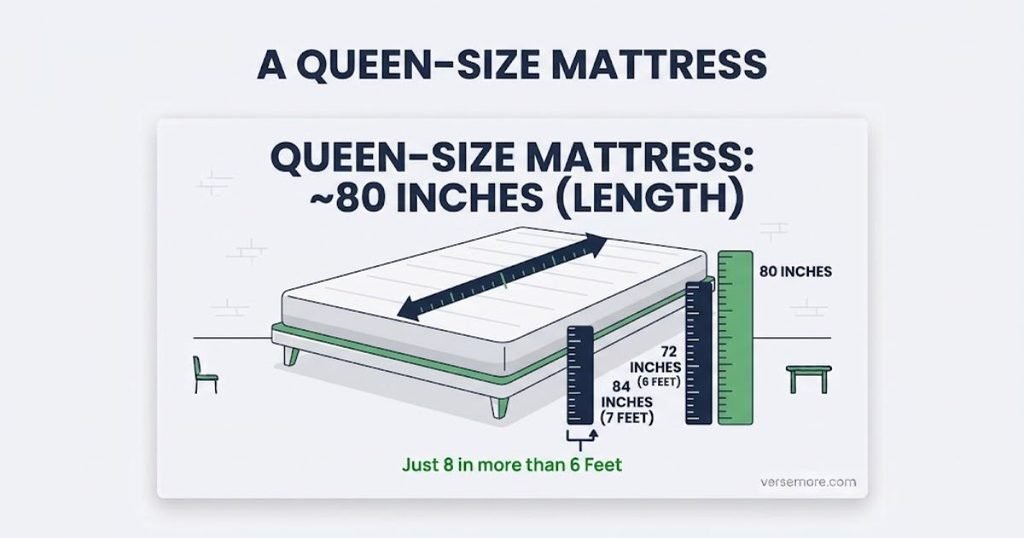
In the United States, a standard queen mattress measures 60 inches wide and 80 inches long. Its 60-inch width is only 3 inches greater than 57 inches.
That makes the width of a queen mattress one of the more practical household comparisons for this measurement. Imagine measuring across the mattress from one side to the other: the full width is slightly longer than 57 inches.
Do not confuse the mattress width with its length. Its 80-inch length is considerably greater than the target measurement, and actual bed frames may have larger outside dimensions than the mattress itself.
9. A Five-Foot Bathtub
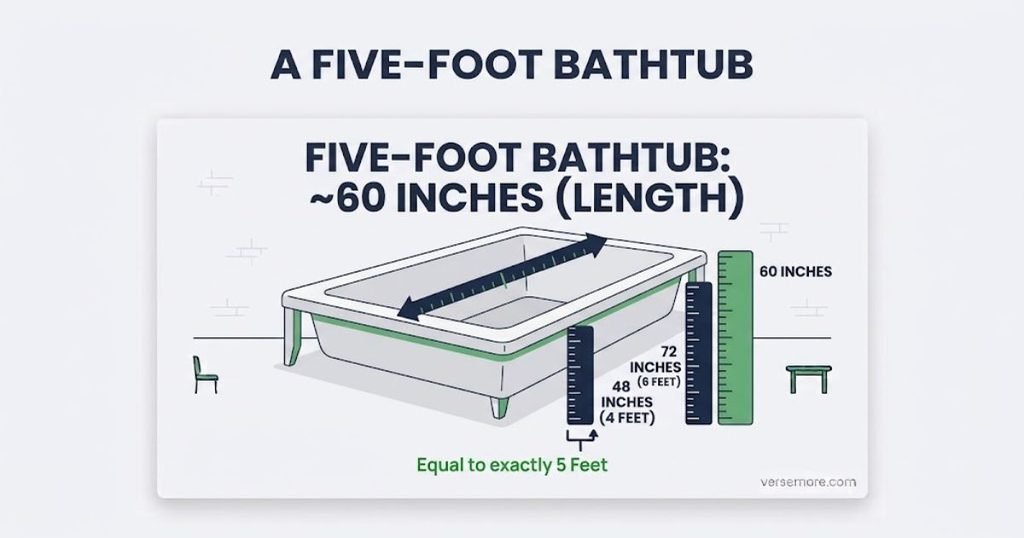
A bathtub described as five feet long has a nominal length of 60 inches. That is just 3 inches longer than 57 inches, so it offers a straightforward comparison.
However, the advertised size may not match the exact outside measurement of every bathtub. The interior bathing space can also be shorter than the overall length because of the shape of the ends and the thickness of the walls.
If you are planning a bathroom renovation, measure the installation space and check the manufacturer’s specifications rather than relying on a nominal five-foot label.
10. A Full-Size Ping-Pong Table
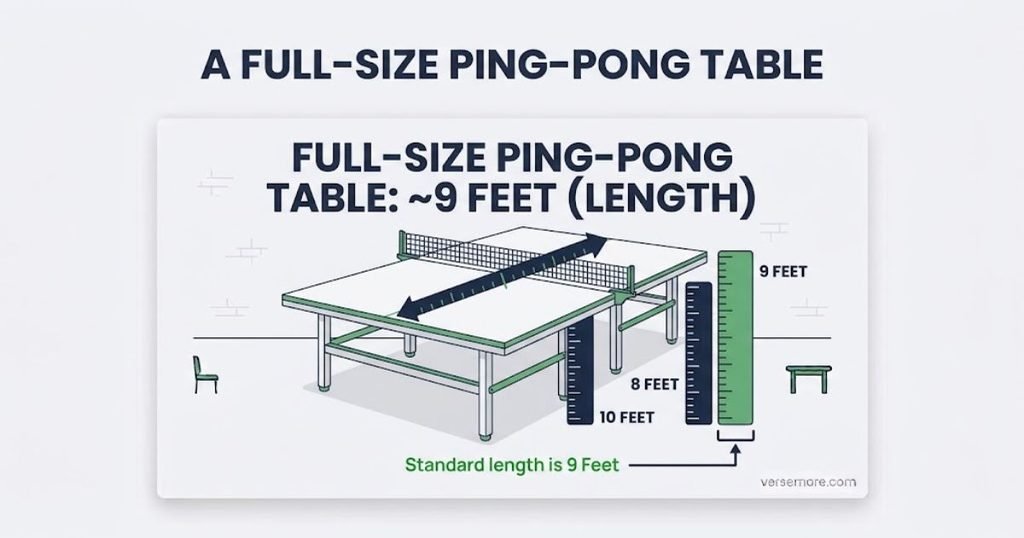
A regulation-size table tennis table measures 108 inches long and 60 inches wide. Its width is therefore only 3 inches greater than 57 inches.
This gives you a useful comparison with a familiar recreational object. Picture measuring across the shorter side of the playing surface rather than along its full length.
The distinction matters because the table’s length is almost twice the target measurement. If you use a ping-pong table as a visual reference, make sure you are comparing the correct side.
11. A Standard Yoga Mat
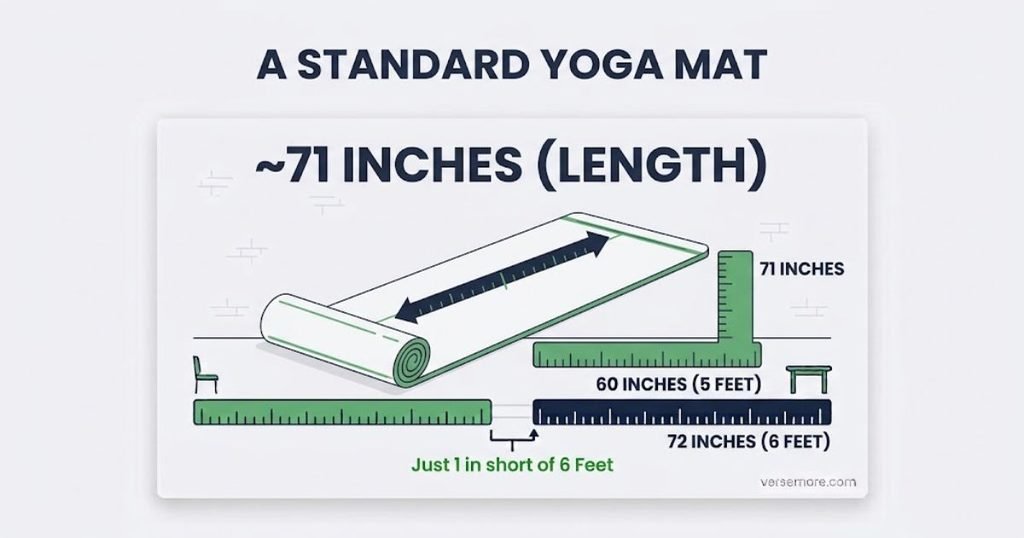
Many standard yoga mats are approximately 68 inches long, although sizes vary by brand and model. That makes a common yoga mat about 11 inches longer than 57 inches.
If you have a yoga mat at home, it can help you picture a length slightly greater than the target. You can compare the first 57 inches of the mat with its full length to understand the difference.
This example is useful because it also shows why a familiar object should not automatically be treated as an exact measurement. A longer mat may measure 70 or 72 inches, while a shorter model may have different dimensions.
12. A Four-Foot Whiteboard
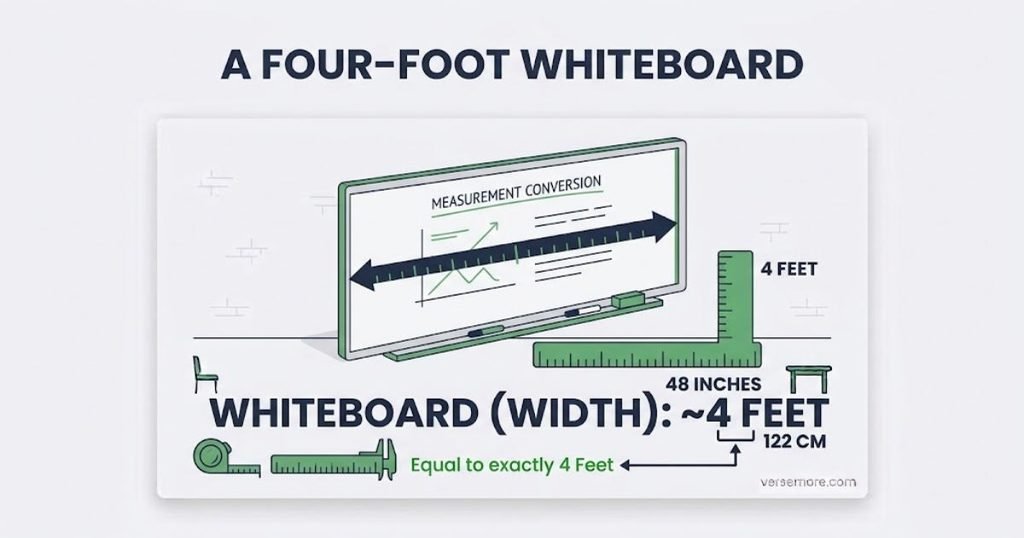
A four-foot whiteboard measures 48 inches along its four-foot side. That is 9 inches shorter than 57 inches.
You can use a wall-mounted whiteboard, office board, or classroom board to visualize a shorter reference length and then imagine adding another 9 inches to it.
Check whether the advertised measurement refers to the writing surface or the entire board, including its frame. The outside dimensions may be slightly larger than the nominal size.
Editorial note: The pool cue, television, mattress, ping-pong table, and yoga mat examples have supporting dimension references. The ironing board, dining table, folding table, mirror, divider, bathtub, and whiteboard examples are illustrative categories whose dimensions vary; they should not be presented as verified exact 57-inch objects without model-specific measurements.
How to Measure 57 Inches Without Guessing
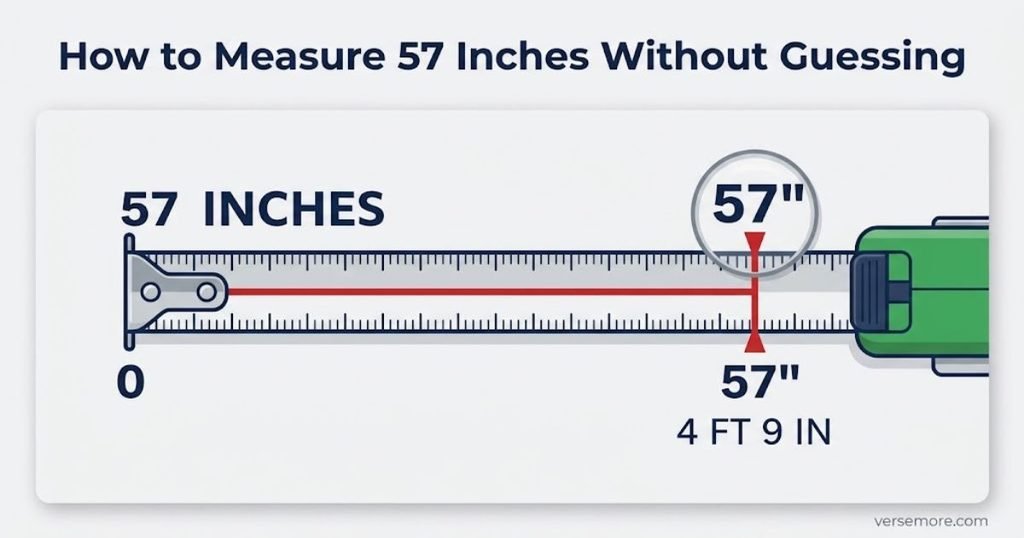
You don’t need a complicated measuring tool to measure 57 inches accurately. A tape measure is the easiest option, but you can also use a ruler or mark the distance on a flat surface.
Using a Tape Measure or Ruler
Follow these steps to measure 57 inches:
1. Place the zero mark of your tape measure at the starting point.
2. Extend the tape along the straight line you want to measure.
3. Find the 57-inch mark, which is also 4 feet 9 inches.
4. Mark the endpoint with a pencil or removable piece of tape if needed.
5. Double-check that the tape is straight and that you started from zero rather than the end of the tape casing.
If you only have a 12-inch ruler, you can measure four complete feet and then add another 9 inches. This gives you a total of 57 inches.
Marking a 57-Inch Span on a Wall or Floor
If you need to visualize 57 inches before moving furniture, mark the distance on the floor or wall.
Measure 57 inches from your starting point and place a small piece of painter’s tape at the endpoint. This creates a visible reference line that can help you determine whether a desk, cabinet, mirror, or other item will fit.
For furniture placement, measure the item’s actual dimensions and leave enough clearance for doors, drawers, walking space, or nearby objects. A measurement that fits exactly on paper may not be practical in a real room.
Estimating 57 Inches Without a Measuring Tool
When no measuring tool is available, you can estimate 57 inches using a familiar object with known dimensions. For example, a standard queen mattress is 60 inches wide, so its width provides a close reference.
However, avoid relying on your hand span, arm length, or footsteps unless you have measured them beforehand. These estimates vary from person to person and can introduce errors that matter when fitting furniture or installing fixtures.
Where Does a 57-Inch Measurement Matter?
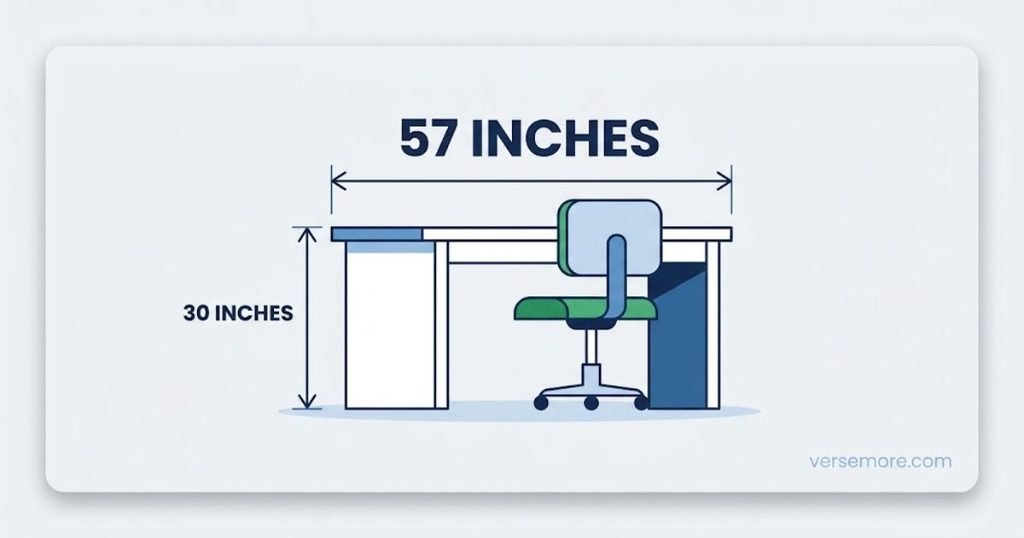
Knowing how long 57 inches is can help with more than visualizing an everyday measurement. It can also help you compare products, plan a room, and check whether an object will fit in a particular space.
Buying Furniture and Checking Available Space
A 57-inch measurement can be useful when comparing dining tables, desks, cabinets, benches, and other furniture. Before purchasing an item, check its listed width, depth, and height rather than relying on a single dimension.
For example, if a desk is 57 inches wide, you need at least that much horizontal space for the desk itself. You may also need additional room for a chair, drawers, cables, or movement around the desk.
Measure the available space at floor level and, where necessary, at the height where the furniture will sit. Walls, skirting boards, and other obstacles can affect the usable dimensions.
Comparing Television Dimensions and Screen Sizes
Television sizes are commonly advertised using the diagonal measurement of the screen. A 55-inch television does not have a width of 55 inches; its horizontal width is typically smaller.
This distinction is useful when comparing a television with a 57-inch shelf or cabinet. Check the manufacturer’s overall width, including the frame, and consider the placement of the stand or mounting hardware.
Checking Clearance, Orientation, and Measurement Tolerance
A length of 57 inches can fit in one direction but not another. For example, a rectangular piece of furniture may fit along a wall but be too deep for a narrow room.
Check three things before making a purchase or installation:
· Orientation: Confirm whether the required measurement is the width, height, depth, or length.
· Clearance: Allow enough room for installation, doors, drawers, and movement.
· Tolerance: Consider small differences between advertised dimensions and the actual product.
For tight spaces, measure the item itself and the available area rather than relying on nominal product sizes. This simple check can prevent unnecessary returns and installation problems.
FAQ’s
How Many Feet Is 57 Inches?
57 inches equals 4.75 feet, or 4 feet 9 inches. Divide 57 by 12 to convert inches into decimal feet. For everyday measurements, 4 feet 9 inches is often the easiest format to understand.
How Many Centimeters Is 57 Inches?
57 inches equals exactly 144.78 centimeters. This conversion uses the exact relationship of 1 inch to 2.54 centimeters. For a rough estimate, you can round the measurement to 145 centimeters.
Is 57 Inches Almost 5 Feet?
Yes. Five feet equals 60 inches, so 57 inches is only 3 inches shorter. This makes 57 inches a useful measurement to visualize as just under five feet.
How Many Meters Is 57 Inches?
57 inches equals 1.4478 meters, or approximately 1.45 meters when rounded to two decimal places. The more precise figure is useful when comparing measurements, while the rounded figure is convenient for everyday estimates.
What Is 57 Inches in Millimeters?
57 inches equals 1,447.8 millimeters. To convert inches into millimeters, multiply the measurement by 25.4. This unit can be helpful for detailed specifications, manufacturing, and certain installation tasks.
Is 57 Inches Longer Than 4 Feet?
Yes. Four feet equals 48 inches, so 57 inches is 9 inches longer than 4 feet. The complete measurement is 4 feet 9 inches.
How Can I Visualize 57 Inches at Home?
Compare 57 inches with a familiar object whose dimensions you know, such as the width of a queen mattress, which is commonly 60 inches. You can also mark 57 inches on a wall or floor with a tape measure to create an accurate visual reference.
Is a 57-Inch Television 57 Inches Wide?
Not necessarily. Television screen sizes are generally measured diagonally from one corner of the screen to the opposite corner. The actual width is smaller and depends on the screen’s aspect ratio and the television’s design.
Conclusion
Understanding how long is 57 inches becomes much easier when you convert it into familiar units and compare it with objects around you. The measurement equals 4 feet 9 inches, 144.78 centimeters, or 1.4478 meters, making it just 3 inches shorter than five feet.
Everyday references such as a queen mattress, a pool cue, or a five-foot bathtub can help you picture the length, provided you account for differences in actual dimensions. When accuracy matters, a tape measure remains the most reliable way to confirm the size of an object or available space.

I am the admin of VerseMore, sharing helpful, informative, and engaging content on various topics to inspire readers, provide value, and make everyday life easier.